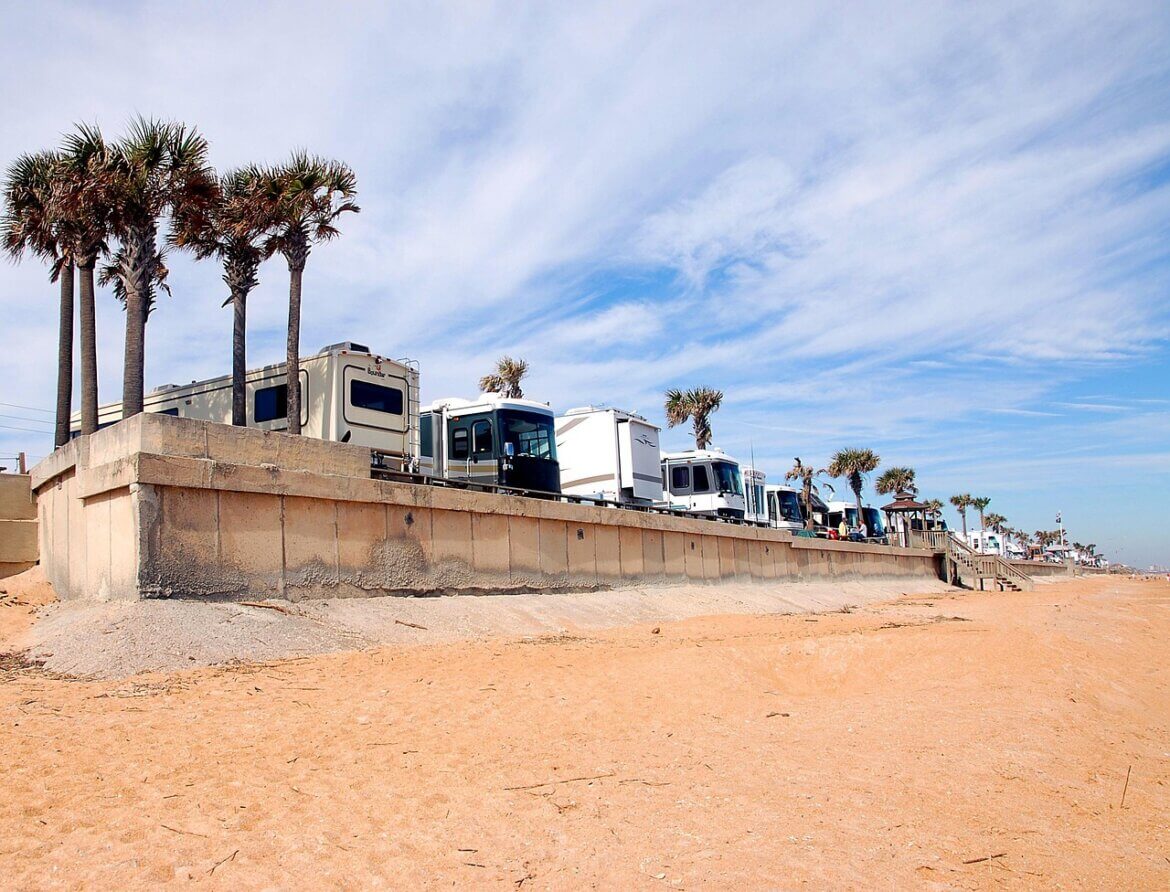
RV travellers often try to stretch their budgets with free or cheap campsites, and with a little research you can find free RV parks all over the world. In the US, for example, many public lands managed by the National Forest Service or BLM allow dispersed camping at no cost. Similarly, Canada’s forests and “recreation areas” on Crown land (BC) or PLUZ zones (Alberta) offer free camping, while citizens can stay up to 21 days on federal land (foreign visitors need a permit).
North America (USA and Canada)
In North America, free camping often means “boondocking” on public land. In the US, federal areas such as BLM lands, national forests, national parks, state management areas and wildlife management areas often allow free or very cheap camping. Many veterans also use rest areas or motorway pullouts for a quick overnight stop. In Canada, several provinces have networks of free sites: British Columbia’s Ministry of Forests, for example, maintains hundreds of free recreation sites in remote regions. Alberta has Public Land Use Zones (PLUZ) that are open to boondocking (which usually requires a minimal provincial permit). Keep in mind that dispersed sites have no hookups or services (no water or toilets), so treat them as primitive camping. As a tip, the America the Beautiful pass ($80/year) also provides access to federal parks, many of which have cheap (or even free) tent or backcountry sites for campers. If you plan to stay on federal land in the US, it’s worth reviewing the official dispersed camping guidelines from the U.S. Forest Service.
Europe and the UK
Rules vary widely across Europe. In Scandinavia (Norway, Sweden), the “right of public access” allows you to camp for one night on public land as long as you stay far away from habitation. Other countries are stricter: Germany, for example, prohibits wild camping altogether (by law you can only stop briefly in a car park to “restore your driving skills”, not to camp). The UK also prohibits wild camping without landowner permission in most areas, but in practice overnight stops in remote rest areas or pub car parks (e.g. to visit a local pub) are often quietly tolerated. In general, look for official “Stellplatz” or car parks that welcome motorhomes for one night (often for a small fee) and avoid camping in prohibited zones. Apps and forums such as Park4Night, iOverlander or local groups can point out these places or share tips.
Australia and New Zealand
In Australasia, “free camping” means staying off-grid in self-contained vehicles. New Zealand’s ‘ free camping’ concept allows motorhomes to stay for free in many public sites – but there are strict rules (take out all rubbish, use toilets and check local prohibitions). There are around 500 authorised free camping sites across the country, but there are fines for breaking the rules or ignoring the signs. In Australia, free camping is only allowed in designated areas, often managed by state parks or local councils. These places may use honesty boxes or have stay restrictions. Some remote beaches, rest areas or national park bushcamps are free. Laws vary from state to state and even municipality to municipality, so it’s a good idea to check local park websites (e.g. National Parks NSW) before you stop. In both countries, a self-contained caravan (with its own toilet and water tank) is often required for ‘freedom camping’.
 Iceland
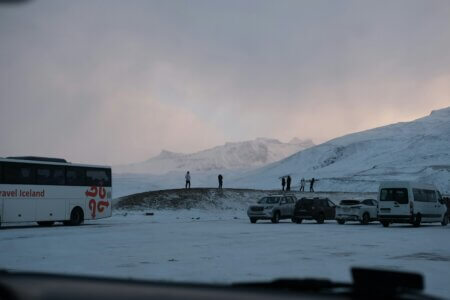
Iceland has very scenic but regulated camping options. Technically, you can pitch a tent for one night on uncultivated public land (so-called “free camping”). However, there are many caveats: motorhomes are not allowed to camp freely outside of designated areas and wild camping is prohibited in many popular or sensitive areas (such as the southern lowlands and major national parks). In practice, most travellers use one of the country’s 170 or so official campsites, which are cheap (around 12-20 USD per night) and often don’t require advance booking. In short, while Iceland’s wilderness is open, it’s hard to find a free legal site, so plan to use established sites on your trip.
Tips and resources
Use government/public resources. Check forestry or parks websites (USFS, BLM, Canadian Parks, DOC NZ, etc.) for maps of free campsites. For example, the NZ Department of Conservation has a list of all approved free campsites. Citizen initiatives like freecampsites.net aggregate user-created free sites (it has been described as “the Waze of free campsites”).
Apps and maps: Smartphone apps like iOverlander, Park4Night or country-specific apps (e.g. CamperMate in NZ) allow you to search for free sites or read reviews from other campers. They’re a must-have tool for planning on the go.
Overnight parking: Many campers stop at large shops and service centres. Walmart, Cracker Barrel, Camping World/Cabela’s/Bass Pro stores, truck stops (Flying J/Pilot) and casino car parks often allow an overnight stay at no cost (usually if you ask management or make a purchase). Always be discreet: park in the back, keep slides inside and don’t camp outside the car. Motorway service areas are also an option where legal.
Leave no trace: wherever you park, treat the place as fragile. Follow local rules and etiquette (for example, many places require self-contained vehicles or prohibit camping near water sources). Don’t leave rubbish and only camp for short overnight stays unless otherwise stated. Many countries explicitly state “leave footprints only” as a rule. For global camping etiquette, the Leave No Trace principles provide a clear standard to minimise your impact when staying in free or undeveloped sites.
You can make free RV parking even easier by following simple travel habits that keep your days relaxed instead of rushed. Many RVers use the 3 3 3 rule to avoid burnout and enjoy more flexible overnight stays, especially when they mix paid campsites with free stays in public areas. If you want a quick overview of how it works, check out our guide.
Happy camping and safe travelling – and don’t forget to book your campervan so you can get going (and resting) on your next adventure!